
Communicating Plan Changes Without an Uprising
Changing a benefits plan can feel a bit like changing the office coffee supplier – everyone has an opinion, and nobody is shy about sharing it. The difference is that changes to benefits can affect people’s families, wallets, and health, so the stakes are higher.
The way you communicate changes often matters as much as the changes themselves. Here are some principles to consider:
Start with “why.” Explain the business reasons in plain language – rising costs, unsustainable usage patterns, or a shift in philosophy (for example, more focus on mental health). People may not love the change, but they’re more likely to accept it if they understand the logic.
Show the whole picture. Highlight what is improving or staying generous alongside what is tightening. If you’re adding Teladoc or increasing mental-health coverage while adding a combined paramedical practitioner maximum, say so.
Use multiple channels. Town halls, manager talking points, short emails, FAQs and intranet posts all have a role. Different employees absorb information differently.
Give examples. Simple claim scenarios (“Here’s what your typical massage visit will look like before and after”) make changes real and reduce anxiety.
Create a feedback loop. Give employees a way to ask questions and get clear answers. Even a short Q&A period or dedicated inbox can dramatically lower frustration.
As your advisor, we can help draft employee-friendly communications, equip your team with talking points that align with your benefits philosophy, or present the plan directly to your employees ourselves. The goal isn’t spin; it’s clarity and trust. When employees understand that you’re managing the plan responsibly so it will still be there for them in five years, the temperature in the room drops quickly.
Disclaimer: This article is for general information only. It is not insurance, legal, tax, or accounting advice. Legislation and carrier practices can change; please confirm details for your own plan. E&OE.
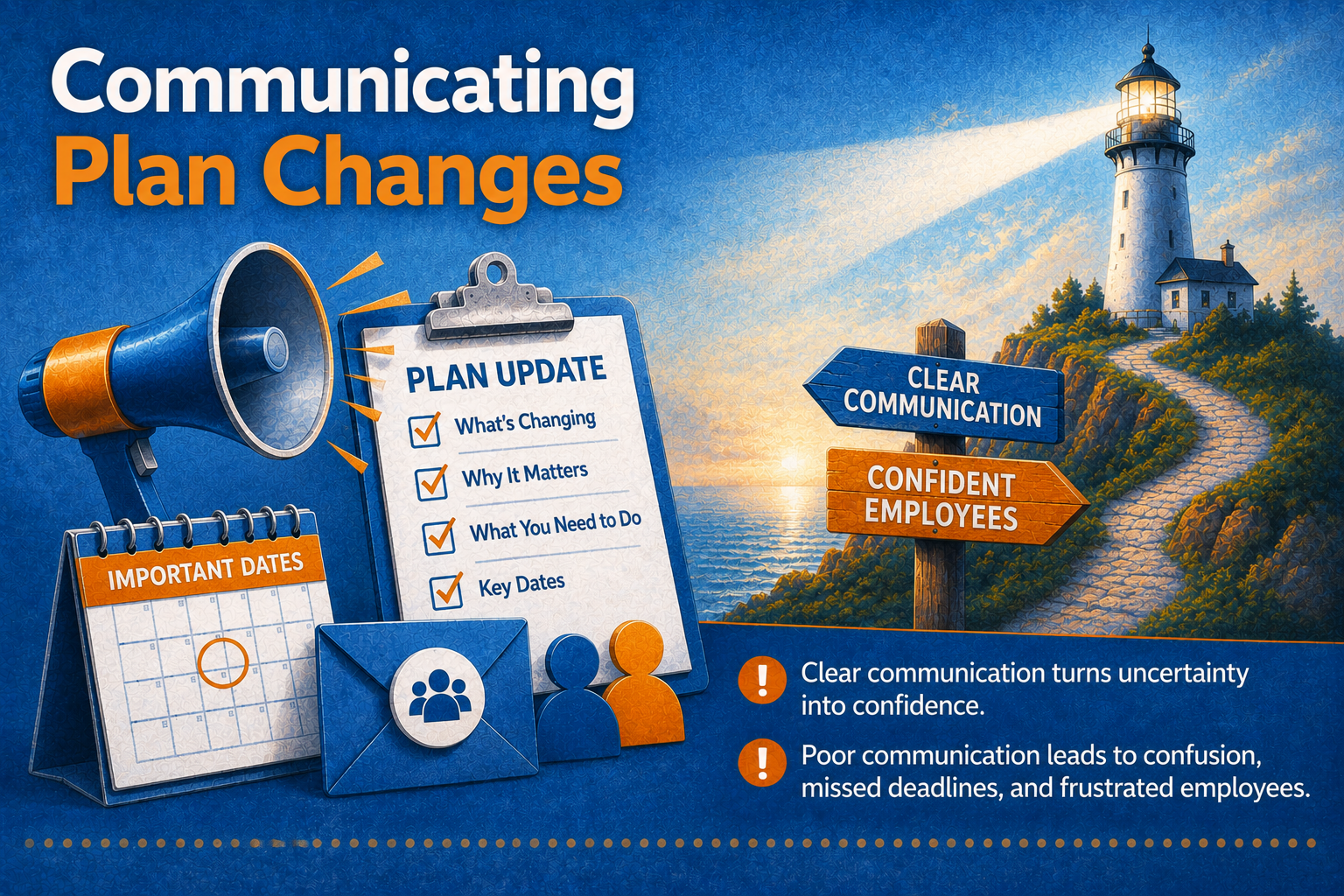
Communicating Plan Changes